
The NCAA volleyball recruiting calendar tracks when college coaches can contact prospective student-athletes, run evaluations, and host campus visits across NCAA Division I, II, and III, NAIA, and JUCO.
Key dates include June 15 after sophomore year (when Division I and II coaches can begin direct communication), official visit windows starting August 1 before junior year, and National Signing Day in November of senior year. Division I has the most restrictive calendar; Division III, NAIA, and NJCAA have the most open communication rules.
The single most common question I get from other volleyball moms is “What is June 15?” — followed by “what happens before that” and “are we already behind.” This is the volleyball recruiting timeline that answers all three. Reading NCAA recruiting rules isn’t fun — it’s about as fun as reading tax law — but three minutes in and you’ll have what you need.
The pillar guide to how college volleyball recruiting works is the broader companion if you’re starting fresh.
Key Takeaways
- The most important date in volleyball recruiting is June 15 after sophomore year — when NCAA Division I and II coaches can first make direct, personal contact with recruits. Many D1 verbal offers happen within the first two weeks of that window.
- The calendar varies wildly by division. D1 and D2 wait until June 15, while D3, NAIA, and JUCO coaches can communicate at any age. If you’re targeting smaller divisions, your recruiting clock starts much earlier than parents focused only on D1 realize.
- Recruiting periods (contact, evaluation, quiet, and dead) govern what coaches can do at any given time. A coach can evaluate your daughter at a tournament during a dead period — but cannot pull the family aside to talk.
- Plan backward from June 15. The most-prepared families treat the calendar as a checklist: “June 15 is in eight months — what does our daughter need by then?” That single question turns a confusing calendar into a workable plan.
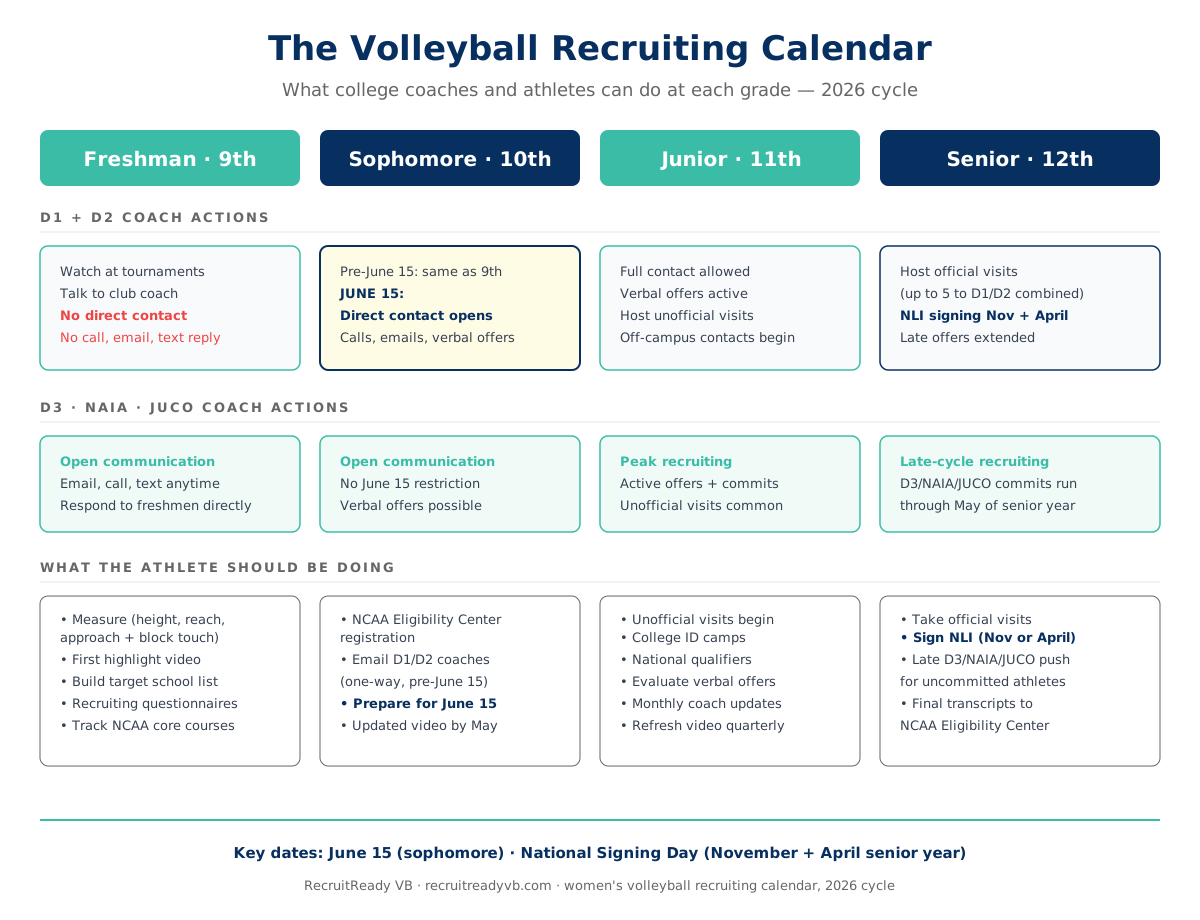
Freshman Year (Grade 9): The Foundation Year
Freshman year volleyball recruiting is mostly a year of getting set up. NCAA Division I and II college coaches cannot directly communicate with recruits or their families until June 15 after the recruit’s sophomore year of high school, while NAIA, NCAA Division III, and NJCAA have fewer restrictions on communication and can talk with freshmen openly. Coaches can send generic camp brochures, questionnaire requests, and official NCAA educational materials at any time, but personal communication waits.
That said, college coaches begin evaluating recruits as early as 13 to 14 years old for women’s NCAA Division I and high-level Division II programs, while men’s NCAA Division I and II programs typically start evaluating at 15 to 16 years old. Evaluation of recruits is an ongoing process that includes assessing athleticism, physicality, personality, character, and leadership skills, and it generally involves multiple coaches on staff.
The athlete should be doing in 9th grade: measure and record height, standing reach, approach touch, and block touch; produce a first 3–5 minute highlight video; list 30–40 potential schools across all five divisions; fill out the recruiting questionnaire on every program’s site. And start tracking NCAA core courses so registration with the NCAA Eligibility Center by end of 10th grade is straightforward. (Our deep dive on how to email college coaches goes deeper on the outreach workflow.)
Sophomore Year (Grade 10): June 15 and the D1 Window Opens
This is the single most important date on the NCAA volleyball recruiting calendar. June 15 after sophomore year is when NCAA Division I and Division II women’s volleyball coaches can begin direct, personal communication with recruits — calls, texts, emails, direct messages, and verbal offers. Before that date, coaches can watch her play but cannot respond personally; on June 15 the dam opens, and families who prepared have a different morning than families who didn’t.
June 15 is the dam opening — phones ring, inboxes fill, and the families who prepared have a different morning than the ones who didn’t.
A few clarifications because this is the most misunderstood date in volleyball recruiting: you can (and should) email D1 and D2 coaches before June 15 — the message goes in their file even if they can’t write back personally. Indirect contact through your club coach is allowed pre-June 15, which is why the club coach’s phone matters.
June 15 applies to women’s volleyball specifically; men’s volleyball has different timing windows by division. A verbal offer can be extended starting June 15, and D1 offers for that recruiting class often go out within the first two weeks. The June 15 rule does not apply to NCAA Division III, NAIA, or NJCAA — those levels can communicate with sophomores at any time.
To walk into June 15 ready: send updated personalized emails to head and assistant coaches six to eight weeks ahead with a fresh highlight video, current measurables, and your summer tournament schedule; refresh the recruiting questionnaire on every program’s site. And coordinate with the club coach who will also be fielding calls.
Junior Year (Grade 11): Peak Recruiting Season

Junior year is when the volleyball recruiting calendar gets crowded — unofficial visits, college ID camps, club qualifiers in front of full coach lists, and the first verbal offers. Official visits to D1 and D2 schools can begin August 1 before junior year (check the current NCAA calendar for the latest start date — these windows have shifted in recent rule cycles).
Unofficial visits are family-paid trips to campus, available to recruits at any age across every division. Most families take their first wave of two to four unofficial visits across junior fall and spring, spread across all of their target divisions — don’t only visit D1s. College ID camps run heavily in May, June, and July of junior year and offer the highest-quality face time with a specific coaching staff; prioritize camps where the school is genuinely on her list.
A verbal offer is a non-binding commitment between a college program and a recruit — coaches and athletes both say yes in conversation, but nothing is legally binding until the National Letter of Intent in senior year. Verbal offers in women’s volleyball typically come in junior year for D1 prospects after June 15, rolling through junior and senior year for D2, D3, NAIA, and JUCO.
There is no requirement to commit during junior year — coaches respect a “thank you, I want to take a couple of visits first” response far more than a verbal commit that gets walked back six months later.
Senior Year (Grade 12): Decisions and Signing
Senior year is mostly about closing — official visits, decisions, and the National Letter of Intent. Official visits are paid for by the school and cover round-trip transportation, lodging up to 48 hours, meals, and game tickets for the recruit and parents. Each recruit gets up to 5 total official visits across all NCAA Division I sports combined (not five for volleyball plus five for another sport) and only one visit to the same institution.
National Signing Day for volleyball is in the early signing period in November of senior year, with a late signing period in April. On signing day the athlete signs a National Letter of Intent (NLI) — the first legally binding document in the recruiting process.
A verbal commit is not binding. The NLI is.
It typically secures a one-year athletic scholarship that most programs renew year-by-year under NCAA rules. Read it carefully and ask what happens if the head coach leaves, if she’s injured, or if she red-shirts.
Not every roster spot is filled by signing day. D3, NAIA, and JUCO recruiting often runs into late spring of senior year — sometimes May or early June.
Junior college is a legitimate path that re-opens doors. Many JUCO athletes transfer up to four-year programs after one or two years with better recruiting leverage than they had in high school.
NCAA Recruiting Periods: Contact, Evaluation, Quiet, and Dead
The NCAA recruiting year is divided into specific periods that govern what coaches and athletes are permitted to do. The NCAA volleyball recruiting calendar includes specific periods such as contact periods, evaluation periods, quiet periods, and dead periods, which dictate when coaches can interact with recruits.
Understanding the period matters more than memorizing every date.
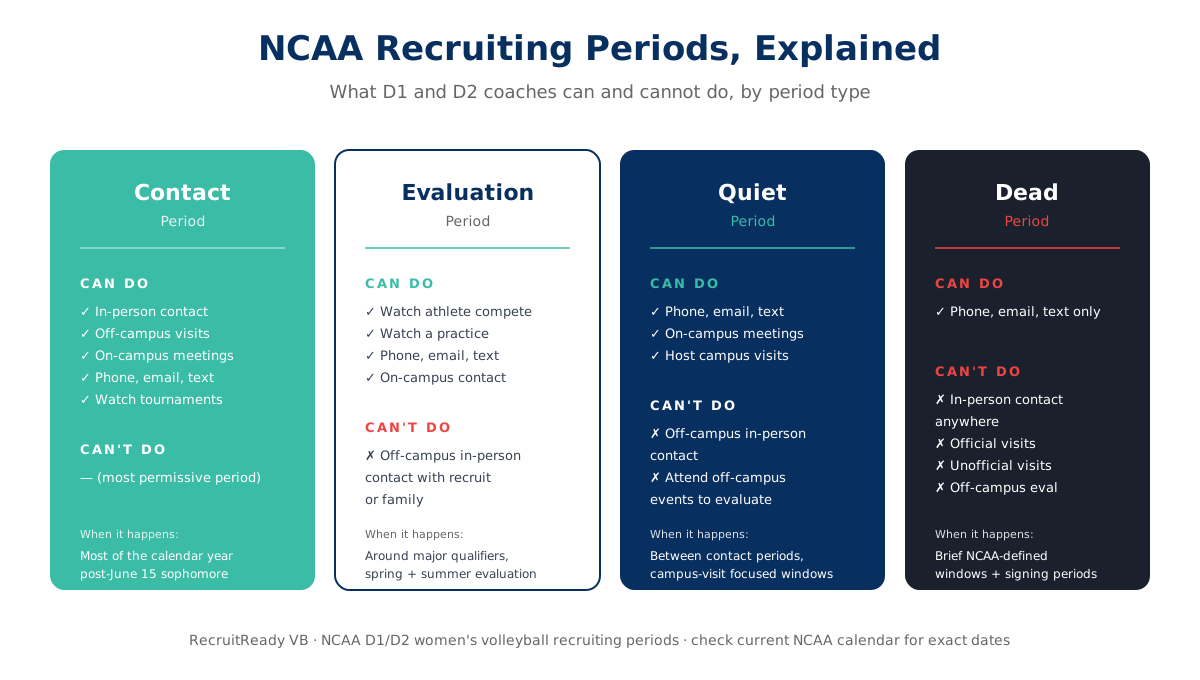
The volleyball recruiting calendar of contact, evaluation, quiet, and dead periods is published annually by the NCAA. During a dead period, NCAA Division I coaches may not have face to face contact with recruits or their families, but they can still communicate via phone, email, and social media.
Most families never memorize the calendar — club coaches, college coaches, and recruiting platforms reference it for you — but knowing the four categories means “we can’t host campus visits during the dead period in mid-July” makes immediate sense. Recruits can communicate with college coaches at any time, including sending emails, texts, and direct messages, regardless of the NCAA’s communication restrictions on coaches.
NCAA Championship and AVCA Annual Awards Banquet Calendar Moments
A few hyper-specific calendar moments families miss: there’s typically a brief dead period from the Sunday immediately following the NCAA Championship through 8 a.m. on the day after the AVCA Annual Awards Banquet — during that window, no face to face contact is allowed.
When the NCAA championship occurs, college coaches attending the championship site can evaluate athletes who compete there, but only on the day of the event on that day; a recruiting conversation cannot occur off the championship site during such an event. The Division I calendar typically runs through July 31, so coaches attending events after that fall under the new annual calendar.
If your daughter is competing at a high-profile tournament that overlaps a championship date, ask the question: is this weekend a contact period, evaluation period, quiet period, or dead period for volleyball, and can coaches attend?
NCAA Division I, II, III, NAIA, and JUCO Calendar Differences
The biggest source of confusion about the NCAA volleyball recruiting calendar is families reading one set of rules and assuming they apply across division levels — different divisions follow different rules.
| Division | First direct contact allowed | Specific rules |
|---|---|---|
| NCAA Division I | June 15 after sophomore year | Strict — defined contact, evaluation, quiet, and dead periods |
| NCAA Division II | June 15 after sophomore year | Strict — same period categories as D1 with some date differences |
| NCAA Division III | Anytime | Loose — most relaxed recruiting rules, allowing most contact at any time, with restrictions only on official visits and off-campus contact with coaches; official visits begin January 1 of junior year |
| NAIA | Anytime | Loose — relationship-driven; coaches typically start evaluating recruits at ages 16 or 17 |
| NJCAA (JUCO) | Anytime | Loose — coaches can recruit late in the cycle without restriction |
For most NAIA, Division III, and NJCAA programs, coaches typically start evaluating recruits at ages 16 or 17, often after the recruit has taken their SAT or ACT exams and has a more complete high school transcript. NCAA Division 3 volleyball colleges have the most relaxed recruiting rules.
For deeper coverage of the rules themselves, see our full guide to NCAA volleyball recruiting rules.
Division I Beach Volleyball Recruiting Calendar
Beach volleyball follows rules similar to women’s indoor volleyball, but fewer roster spots make the timing tighter. Division I beach volleyball coaches can begin calls, texts, emails, and direct messages with prospective student-athletes on June 15 after sophomore year.
Official visits and off-campus contact for D1 beach can begin August 1 before junior year. The 2025–26 beach calendar runs through July 31 and includes contact, evaluation, quiet, and dead windows — download the sport-specific NCAA calendar before booking a visit, since the indoor and beach calendars share major milestones but differ around July, signing windows, and the championship.
Common Mistakes Families Make with the Recruiting Calendar
The biggest mistake is assuming a tournament weekend is automatically open for recruiting.
If a recruit schedules a campus tour during a dead period, it becomes a general admissions visit with no athletics contact — coaches can’t meet, host, or talk with the family in person. Before booking flights or hotels, always ask: “Is this weekend a contact period for volleyball?”
Another mistake is expecting an off-campus recruiting conversation during an evaluation period. A coach evaluating at a club tournament cannot pull the family aside and discuss the program. That’s reserved for the contact period or on-campus meetings.
Incidental hellos happen — full recruiting conversations don’t. And don’t assume the women’s volleyball and men’s volleyball calendars match; men’s NCAA Division I and II programs typically start evaluating recruits at 15–16 years old with a different sport-specific calendar.
If anyone tells you that you need to pay for a recruiting service to navigate the calendar, check our honest review of whether NCSA is worth it for volleyball first — most of the calendar work is free if you know what to track.
📥 Print the calendar: Our free 7-Day Volleyball Recruiting Jumpstart includes a printable one-page version of this calendar — grade-by-grade, with the key dates highlighted.
Tape it on the fridge.
Frequently Asked Questions
When can D1 coaches contact volleyball recruits?
NCAA Division I women’s volleyball coaches can begin direct contact with a recruit on June 15 after the recruit’s sophomore year of high school. Before that date they can watch and evaluate but cannot call, text, or email back personally.
NCAA Division II uses the same June 15 rule. Division III, NAIA, and NJCAA coaches can contact recruits at any age.
What is June 15 in volleyball recruiting?
June 15 is the date after a women’s volleyball recruit’s sophomore year when NCAA Division I and II college coaches can first make direct contact — the single most heavily watched date on the volleyball recruiting calendar.
Many D1 programs schedule their first calls, first verbal offers, and first campus invitations within the first two weeks of that window.
When should my daughter start being recruited for volleyball?
Most women’s prospects should begin the active recruiting process — highlight video, recruiting questionnaires, college coach emails, NCAA Eligibility Center registration, and target school list — by 9th or 10th grade. D1 and D2 conversations don’t start until June 15 after sophomore year, but the preparation begins much earlier.
D3, NAIA, and JUCO conversations can start in freshman year.
What’s the difference between a verbal offer and an official offer?
A verbal offer is a non-binding commitment between a college program and a recruit — both sides say “yes” in conversation, but nothing is legally binding. Either side can change their mind.
The first legally binding document is the National Letter of Intent (NLI), signed in November (early signing period) or April (late signing period) of senior year.
Can D3 coaches contact volleyball freshmen?
Yes. NCAA Division III, NAIA, and NJCAA coaches have far more flexible communication rules than D1 and D2 — no June 15 restriction.
If a D3 program is on your daughter’s target list, she can email the head coach today and expect a real response. This is one reason D3 is the most underrated entry point on the recruiting calendar.
How many official visits can a volleyball recruit take?
Division I recruits get 5 total official visits across all D1 sports combined (not five for volleyball alone), with only one visit to the same institution.
Division II permits official visits starting June 15 of sophomore year. Division III allows official visits beginning January 1 of junior year.
Confirm specific NAIA and NJCAA rules with each campus compliance office.
Where can I find the current NCAA volleyball recruiting calendar?
Use the official NCAA site and search for the current cycle — for example, “NCAA Division I women’s volleyball recruiting calendar 2025–26” or “NCAA beach volleyball recruiting calendar.” Calendars change annually, so always confirm against the current year before booking travel or campus visits.
Final Word
The NCAA volleyball recruiting calendar is not a calendar you memorize — it’s one you reference, more often as June 15 of sophomore year approaches and junior year ramps up. The big dates (June 15, signing day) you won’t forget. The families who use it best plan backward from it: “June 15 is in eight months — what does our daughter need by then?” That question turns a confusing calendar into a checklist.
Start today
It includes a printable one-page calendar you can tape on the fridge, plus the first week of recruiting actions broken into one page per day.
Download the free printable 7-Day Volleyball Recruiting Jumpstart →
P.S. — The full year-by-year version of this with 58 printable guides, coach email templates, and the recruiting tracker spreadsheet is our self-paced course for lifetime access. Start with the free plan if you want to test the system first.