
To email a college volleyball coach, send a short introductory email (5–6 sentences max) from the athlete’s email — not the parent’s. Use a good subject line with graduation year, position, height, athlete name, and club and team name.
Open by greeting the coach by name, state your name, graduation year, position, high school name, and location, and add a personal reason for interest in their program. Include an athletic snapshot (height, vertical, approach touch, club coach contact), academic stats (GPA, test scores, AP courses, notable athletic and academic achievements), a link to your highlight video, contact info, and a follow up plan.
Coaches receive hundreds of emails weekly — keep it concise, scannable, and highly personalized.
“Write your daughter’s coach email” is the single most-asked tactical question in volleyball recruiting. Parents reach for it the night before a tournament; student athletes freeze in front of a blank message. This guide on how to email volleyball coaches has the exact template my daughter uses, the three things that actually make a college coach reply, plus follow up email templates for after a tournament and after silence.
If you’re earlier in the process, the pillar guide to how to get recruited for volleyball is the bigger picture. For timing — when to send the first email — see the volleyball recruiting calendar. For a tools comparison including the NCSA profile and NCSA message center (questions families ask when emailing college coaches at scale), see is NCSA worth it for volleyball.
Key Takeaways
- The athlete sends the email, not the parent. College coaches can tell within two seconds when a parent wrote it — and they remember which families are athlete-led versus parent-led. The right model: athlete writes from her own email account, parent CC’d.
- Keep it under 5–6 sentences. Coaches scan their inbox in 45 seconds or less. A four-paragraph essay is the single most common mistake. Short, specific, and personalized is what gets read and replied to.
- The subject line is the filter. A strong one contains graduation year + position + height + athlete name + club team. Coaches sort their inboxes that way and decide whether to open the email based on the subject alone.
- Follow up after tournaments and through quiet stretches. Send a short post-tournament email within 72 hours. If a coach doesn’t reply, wait 2–3 weeks, then send a brief update with new highlight video and tournament schedule. Stay in inboxes through the long quiet months.
Three Things That Make a College Coach Email Get Read
Coaches receive hundreds of emails weekly. Most are forgettable.
Coaches give about 45 seconds before they decide whether to reply.
To stand out, your email should be concise, personal, and specific to their program — three things determine whether yours actually gets opened, read, and replied to:
- A good subject line is specific, not generic. Coaches scan their inbox by filtering — graduation year, position, height, club team. A subject line that contains all four is filterable, searchable, and instantly readable.A subject line that says “Interested in your program” gets ignored. Keeping your subject line under 75 characters is recommended, as coaches often check emails on their phones and lengthy subject lines may get cut off.
- The first sentence references the coach’s program specifically. Mention the coach by name and reference something specific about their team or program — a recent match result, their coaching style, a returning starter, the system they run.Coaches see right through “I love your school” or “I’d be honored to play for you.” Personalizing each email for the specific coach and program increases your chances of being noticed, since coaches can tell when emails are copied and pasted across multiple schools.
- The body is short — 5 to 6 sentences max. High-level data should be prioritized over lengthy personal stories when communicating with coaches. The shorter and more scannable the email, the more likely it gets read.
That’s it.
Good subject line, personalized opening, short scannable body. Everything below is the structure that puts those three things into a real email you can send today.
A well-structured recruiting email should follow a clear three-part format: an introduction, an athletic and academic snapshot, and a call to action. Inside that three-part framing, the email has 6 specific components — covered below.
The First-Contact Email Template
Here’s the actual template my daughter uses.
Steal it. Print it. Adjust the placeholders for each coach.
Subject: 2027 OH | 6’1″ | [Daughter’s Name] | [Club Name]
Hi Coach [Last Name],
I’m [Daughter’s Name], a 2027 outside hitter at [Club Name] in [City, State]. I’ve been following [Their Program]’s season — congratulations on [specific recent result].
A few quick stats:
- 6’1″ | Approach touch 9’8″ | Block touch 9’4″
- 3.9 GPA, looking at majors in [field]
- 26.8″ vertical
I’m attaching my highlight video [LINK] and my recruiting profile [LINK]. Our next tournament is [tournament + date + court].
I’d love to be on your radar. Happy to send updates after each event.
Thank you for your time, [Daughter’s Name] [Phone] | [Email]
That’s the whole thing. About 90 seconds to read, two minutes to write once you’ve done it a few times.
The fields in brackets are the only things that change between coaches.
📥 Get the printable template pack: Our free 7-Day Volleyball Recruiting Jumpstart includes all three coach email templates (first contact, post-tournament, follow-up) as a printable PDF you can tape on the fridge.
Anatomy of a Good Subject Line
The subject line is crucial — it’s the first piece of information a college coach sees, and it influences whether they choose to open your email. Coaches sort by it, filter by it, and decide whether to open based on it.
A well-crafted subject line should include your full name, graduation year, position, and a key stat or achievement to capture the coach’s attention.
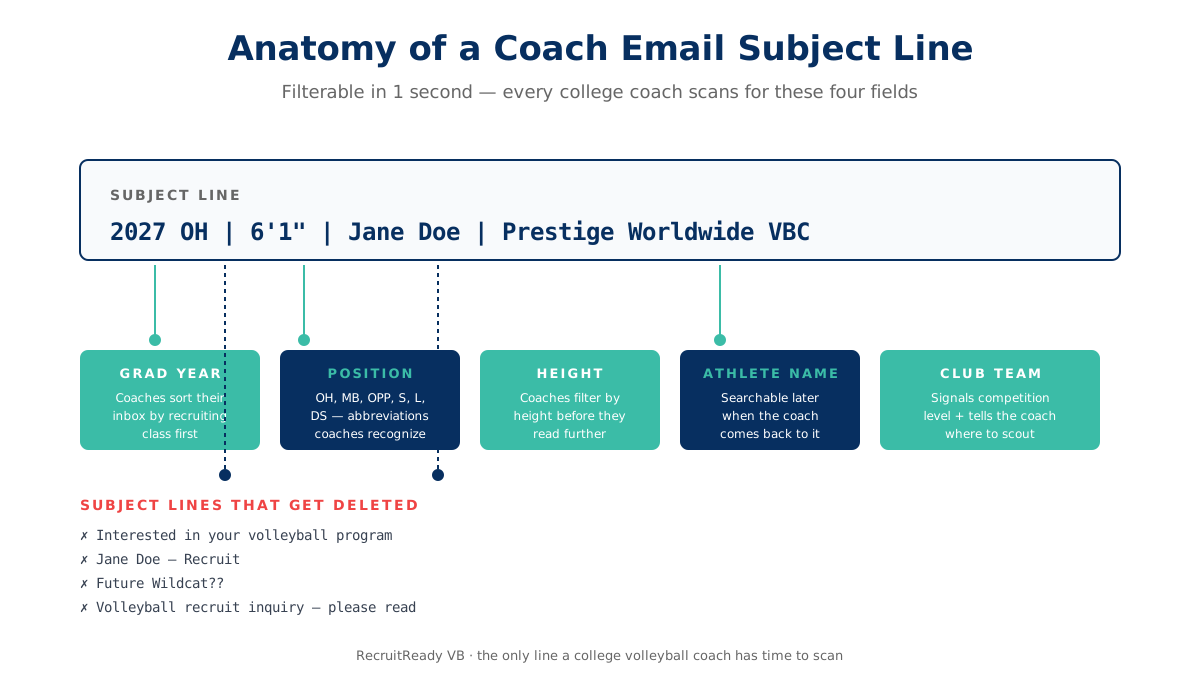
Subject line examples that work (a suggested email format: [Grad Year] | [First & Last Name] | [Position/Skill Set] | [Height]):
2027 OH | 6'1" | Jane Doe | Prestige Worldwide VBC✅ — graduation year, position, height, full name, club. Filterable and instantly readable.2026 Setter | 5'9" | 3.95 GPA | Jane Doe | Bayside Tigers Volleyball✅ — variant with GPA front and center for academic-heavy programs.2027 MB | 6'2" | Jane Doe | Pawnee VBC✅ — middle blocker version.2028 Libero | 5'7" | All-Region | Jane Doe✅ — uses a notable athletic achievement as the key stat.
Subject lines that get deleted:
- ❌
Interested in your volleyball program(generic) - ❌
Jane Doe — Recruit(no filtering data, no class year) - ❌
Future Wildcat??(cringe — the coach doesn’t recruit fans) - ❌
Volleyball recruit inquiry — please read(please-read is the kiss of death) - ❌ A subject line over 75 characters (gets cut off on mobile)
Coaches who manage 200+ inbound recruit emails a month use the subject line as their filter.
Make it scannable in one second.
The Body — What Actually Goes Inside
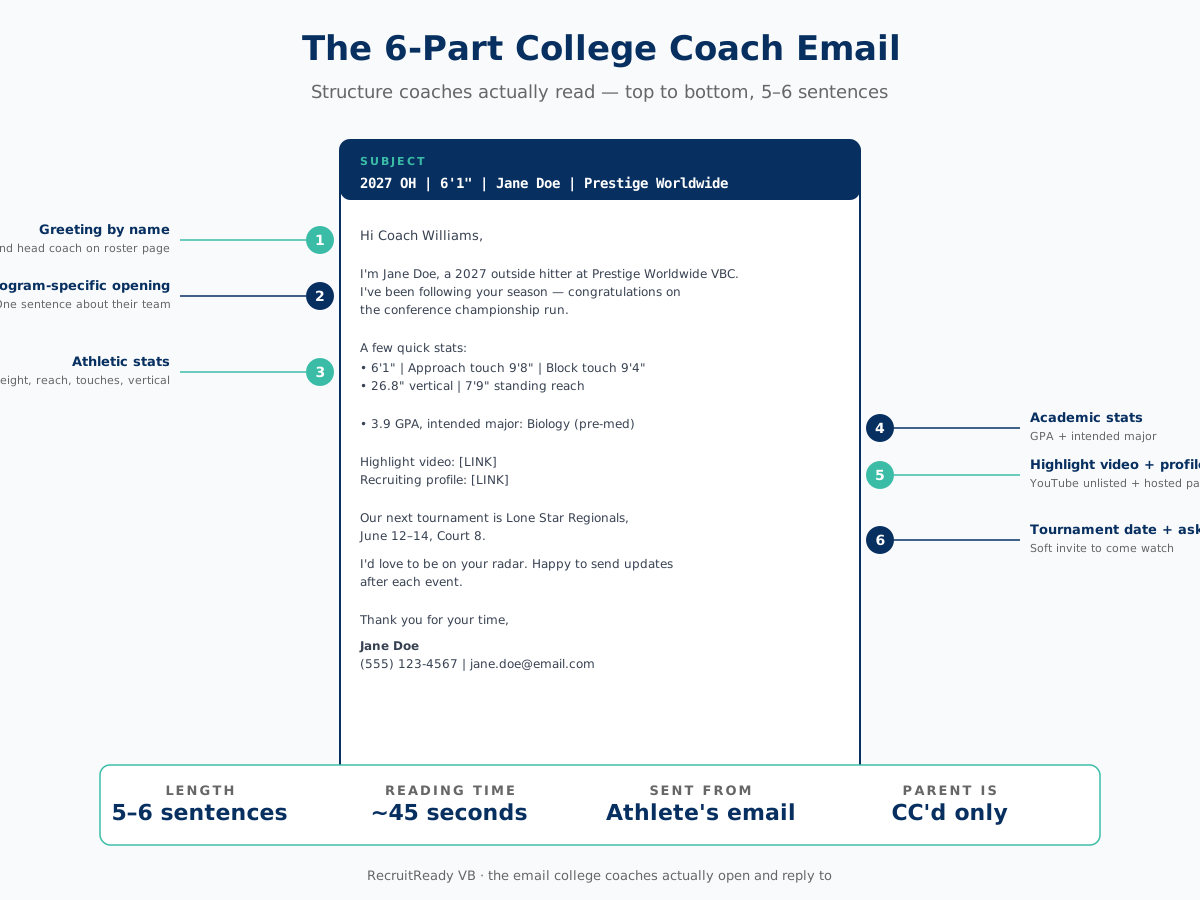
Six components, in this order. This maps directly to HowTo schema, and it’s also the structure of the introductory email above.
An effective introductory email to a college coach should include a personalized greeting, a brief introduction of yourself, your athletic and academic achievements, and a call to action — such as inviting the coach to watch your highlight video.
- Greeting by name. “Hi Coach [Last Name]” works. Some athletes prefer the more formal “Dear Coach [Last Name].” Either is fine — never “Dear Coach” alone, “Hi Coaches!” or “To Whom It May Concern.” Find the head coach’s name on the program’s roster page. If you’re emailing the coaching staff broadly, address the head coach by name and CC the assistant coaches separately.
- One sentence about that coach’s program. In the introduction of your email, greet the coach by name, state your name, graduation year, position, high school name, and location, and add a personal reason for your interest in their program.”I’ve been following your season — congratulations on [specific result]” or “I’ve been studying your coaching style and the system you run from a 6-2.” Pick a recent match, an All-Conference selection, a system change, anything specific. The coach should be able to tell you watched their team.
- Athletic snapshot in 3–4 lines. Include height, vertical, approach touch, block touch, standing reach, and your club coach’s contact info.Position-specific stats if applicable (passing percentage for liberos and DS, hands quality for setters, slide tempo for middle blocker). Use bullet format — short, scannable, no paragraphs.
- Academic background in 1–2 lines. GPA, intended major, test scores (SAT/ACT) if available, AP courses or honors classes completed, and any other notable academic achievements.Coaches at every level vouch for athletes during admissions; academic stats are part of the recruiting conversation.
- Insert link to your highlight video and athlete profile. It is important to link your player profile directly in the email, including an unlisted highlight video on YouTube. Recruiting profile link can point anywhere a hosted page lives — Google Doc, personal site, or your NCSA profile if you have one.Never attach files; coaches don’t open attachments from unknown senders.
- Next tournament date, phone number, and a soft ask. “Our next tournament is [tournament + date + court]” is a soft invite — coaches who are interested will check the schedule and may visit campus invites in the other direction. End with a clear call to action: “I’d love to be on your radar” or “Would you be open to chatting after my next event?” Then sign off with full name, phone number, and email — contact info matters because coaches who liked what they read will reach out by phone calls or email.
That’s the entire body.
Six elements, 5–6 sentences in the prose portion, no fluff.
Post-Tournament Follow-Up Email Template
After a tournament where college coaches were present — qualifiers, showcases, ID camps — send a short follow up email within 72 hours while the moment is fresh. This is the email most families forget to send, and it’s the one that turns a coach who watched into a coach who replies. The highlight video clip you send should be 2 to 3 minutes long, showcasing your best skills at the beginning (full-length highlight reel can be 3–5 minutes — but the post-tournament clip is the short, recent-highlights version).
Subject: Follow-up — 2027 OH | 6’1″ | [Daughter’s Name] | [Club Name]
Hi Coach [Last Name],
Thank you for taking the time to watch our matches at [tournament name] this past weekend. I appreciated the chance to compete in front of college coaches at that level.
One specific moment from the weekend: [match vs. team, set/score, what happened — e.g., “in the third set against XYZ, I had 9 kills and a hitting percentage of .421 in serve-receive rotation”]. I’m attaching a 30-second clip of that match here: [LINK].
Our next tournaments are [next 1–2 events with dates]. I’d love to keep you posted as the season continues.
Thank you again, [Daughter’s Name] [Phone] | [Email]
A few key things about this template:
- Send it within 72 hours. Coaches travel home and forget who they watched. The follow-up is what makes them remember.
- Reference one specific moment. Not “I played well.” A specific match, a specific stat, a specific clip.Coaches respect athletes who watch themselves play and can describe what happened in the third set.
- Include the next tournament. Keep the calendar in front of them.
When You Don’t Get a Reply: The Follow Up Email

Silence after a first email is not a verdict — it’s information. Roster needs change.
Budgets shift. Current coaches move to other programs.
The athlete who’s in their inbox in March is the one they call in May. If there is no response within 1 to 2 weeks of your first introductory email, send a polite follow-up email to restate your interest, then keep a follow up plan running every 2–3 weeks afterward.
Subject: Update — 2027 OH | 6’1″ | [Daughter’s Name] | [Club Name]
Dear Coach [Last Name],
Following up on my email from 2026. I wanted to share a few updates from this spring:
- New highlight reel with footage from [recent tournament]: [LINK — insert link to YouTube unlisted]
- Updated measurables: approach touch now 9’10” (up from 9’8″)
- Recent highlights: [recent academic achievements — e.g., named to Honor Roll, finished AP courses with A grades, SAT 1340]
- Upcoming tournaments: [next 2–3 with dates and courts]
I’m still very interested in [Their Program] and would love to be on your radar for the 2027 class. Happy to share more film or chat whenever your calendar allows.
Thank you, [Daughter’s Name] [Phone Number] | [Email]
When crafting a follow up email, it’s important to provide updates on your performance, share new athletic accomplishments and academic achievements, and reaffirm your interest in the program — while keeping the message concise and relevant. It’s recommended to follow up with college coaches every 2–3 weeks with new updates, such as tournament results or academic achievements, especially if it has been over three months since the last contact.
How often to follow up:
- After the first email: wait 1–2 weeks, then send the introductory follow up
- After the second email: wait 2–3 weeks, then send another update with new film and recent highlights
- After three follow up emails with no reply across 8–10 weeks: move on to the next coach on your list. Their program isn’t recruiting your class year, your position, or your level — it’s not personal.
For more on timing — when D1 and D2 coaches can actually reply (June 15 or September 1 of junior year for some sports), and which divisions can reply immediately — see when coaches can contact recruits in the volleyball recruiting calendar.
When to Send the Email (and Other Tactical Details)
A few small things that compound over hundreds of emails:
- Best time to send: 4–8 p.m., Tuesday through Sunday. Most college coaches check emails at the end of the workday or in the evening between practices.Mondays are inbox-overload; weekends still get read because most coaches travel for recruiting. The best time to email college coaches is between 4–8 p.m., Tuesday to Sunday, though preferences vary based on the coach’s schedule and the NCAA recruiting calendar.
- Don’t use read receipts. They feel professional in business email and feel desperate in recruiting email.Coaches see them and tune out.
- Send to the head coach and an assistant — separately or CC’d. A coaching staff coordinates on recruits; emailing both surfaces your name in two inboxes and shows you’ve done the roster homework.
- Keep contact info consistent across every email and your athlete profile. Same phone number, same email address, same NCSA profile or hosted player profile link. Inconsistency makes families look unorganized.
- Don’t expect next steps in the first reply. A first reply that says “thanks for reaching out, we’ll be in touch” is normal.The real recruiting conversation starts after a coach has watched film and seen the athlete play.
Common Mistakes That Get Your Coach Email Deleted
A short list to avoid:
- Parent-written and parent-sent. Coaches spot a parent-written email in two seconds — and they remember the families. Have the athlete write and send.The parent can be cc’d.
- A generic “I want to play for you” opener. Coaches see hundreds of these. The opener needs one specific reference to that program.
- A subject line that’s just the athlete’s name. No grad year, no position, no height — the email gets filtered out before it’s opened.
- A 4-paragraph essay format. Coaches give 45 seconds.Anything longer than 6 sentences gets skimmed at best.
- Attaching files instead of linking. Coaches don’t open attachments from unknown senders. Use YouTube (unlisted) for highlight video and a hosted page for the profile.
- No specific stats. “I’m a hard worker” doesn’t help a coach project you on their roster.Height, approach touch, block touch, GPA — those numbers do.
- No tournament date or visit window offered. The email needs a clear next step the coach can act on.
If you have time to email 40 coaches, you don’t have a strategy. Pick 8–12 programs across the divisions on your real target list, send the personalized version of the template above to each, and follow up well.
📥 Want the printable version? Our free 7-Day Volleyball Recruiting Jumpstart includes all three email templates plus the subject-line cheat sheet, broken into one printable page per day.
Tape it on the fridge.
Who Sends the Email: Athlete or Parent?
The athlete writes and sends the email. Every time. Coaches can tell when a parent wrote it within two seconds, and they remember.
The from-line is the athlete’s, the writing voice is the athlete’s, the questions are the athlete’s. Parents are CC’d.
Why coaches care: they’re recruiting the athlete, and one of the things they’re screening for is whether the athlete drives her own recruiting process. An athlete who can write her own coach email is a different recruit than one whose parent (or service) writes it for her. Coaches across every division I’ve talked to say the same thing — they pay attention to which families are athlete-led and which are parent-led, and they quietly screen out the latter.
How parents can help without taking over:
- Sit beside her the first time and walk through the template, then step back.
- Read her drafts and give feedback on tone, but don’t rewrite sentences.
- Handle logistics — coordinating tournament travel, scheduling visits, managing the spreadsheet — so she has time to write.
- Track which coaches she’s emailed and when, so follow-ups don’t slip.
The voice in the email should sound like the athlete — confident, factual, brief. Not formal-corporate, not text-message-casual.
Somewhere in between. If you wouldn’t be embarrassed to read it out loud, it’s right.
This is the same reason services that send mass emails on athletes’ behalf don’t move the needle — coaches recognize the templated, service-sent versions and tune them out. (More on this in our review of whether NCSA is worth it for volleyball.)
Frequently Asked Questions
When should my daughter start emailing college volleyball coaches?
Start in 9th or 10th grade. NCAA Division I and II coaches cannot respond personally to D1 and D2 athletes until June 15 after sophomore year, but athletes can email at any age — the message goes in the coach’s file and the relationship has started.
NCAA Division III, NAIA, and JUCO coaches can respond at any age and often will. Sending the first email earlier doesn’t hurt; sending it later does.
How long should a college volleyball coach email be?
5 to 6 sentences maximum in the body, not counting the greeting and sign-off.
Coaches scan emails in 45 seconds or less. The shorter and more specific the email, the more likely it gets read and replied to.
A four-paragraph essay is the most common mistake in recruiting communication.
Should the athlete or the parent send the email?
The athlete. Coaches can tell when a parent wrote and sent an email within two seconds — and they remember which families are athlete-led and which are parent-led.
The right model: the athlete writes and sends from her own email account, with the parent CC’d. Parents handle logistics (travel, scheduling, follow-up tracking) but stay out of the actual email writing.
How do you follow up after a college coach doesn’t reply?
Wait 2 to 3 weeks after the first email, then send a short update email with new highlight video, updated measurables, and the next tournament schedule.
If there’s no reply after a second update (another 3–4 weeks later), wait another month before a third. If three emails across 8–10 weeks bring no response, move on — the program isn’t recruiting your class, position, or level.
What do you say to a college volleyball coach in the first email?
Open with one specific sentence about that coach’s program — a recent match result, a system they run, a returning starter.
Provide athletic stats (height, approach touch, block touch, vertical) in 3–4 lines. Add one academic line (GPA, intended major).
Link to a highlight video and a recruiting profile. List the next tournament date.
Close with a clear soft ask — “I’d love to be on your radar.” Sign off with name, phone, and email.
Is it OK to mass-email coaches with the same message?
No. Coaches recognize templated mass emails immediately — same opener, same vague compliment, identical body — and delete them.
Personalize at minimum the opener (one specific sentence about the program) and the subject line (the coach’s name in the salutation). The athlete profile and the stats can stay constant. The program-specific reference must change for each coach.
Final Word
The volleyball coach email isn’t a hurdle to clear once — it’s a system you use every week of recruiting season.
The athletes who get replies aren’t the ones with the longest essays or the most polished prose. They’re the ones who send a short, specific email from their own address, follow up within 72 hours after a tournament, and stay in coaches’ inboxes through the long quiet months between meaningful events.
Start today
it includes all three email templates as a printable page-per-day plan you can tape on the fridge.
Download the free printable 7-Day Volleyball Recruiting Jumpstart →
P.S. — The full course at recruitreadyvb.com has 14 coach email variations: first contact, post-tournament, post-camp, follow-up after silence, declining offers, accepting visits, end-of-club-season updates, and more. lifetime access and a 14-day money-back guarantee.